Make a donation to the Museum
Feathers of a Phoenix: Making Art to Remember (3-5)
Feathers of a Phoenix: Making Art to Remember
- Grades 3 to 5
- Lesson Duration: 1-2 Class Periods
- Theme: 25th Anniversary
Essential Question: How can creating and sharing art help people express feelings, remember important people or events, and find hope after difficult experiences?
Learning Goals
Students will learn how art can help people express feelings after difficult events.
Students will understand how symbols are used to represent ideas like hope and renewal.
Students will create an artwork that honors someone or something meaningful.
Vocabulary
America’s Camp: A summer camp that ran from 2002-2013 for children who lost parents or loved ones in the 9/11 attacks.
Phoenix: A bird from Greek mythology that is reborn repeatedly, symbolizing hope, renewal, and new beginnings.
Supplies
Crayons, markers, pencils, scissors and any other art supplies available in the classroom.
Feather template (download)
Chart paper or posterboard with the outline of the Phoenix (download)
Note: 25th anniversary lesson plans focus on how the world continues to be impacted by 9/11 and ways different communities chose to respond. If you'd like to build foundational knowledge about what happened on 9/11, we suggest using this lesson plan to prepare your students.
Activity
- Tell students they will be learning about a special artwork made by children who went to a week-long summer camp after 9/11. The camp helped children share their feelings and heal after losing someone they loved.
-
Share the following information with students:
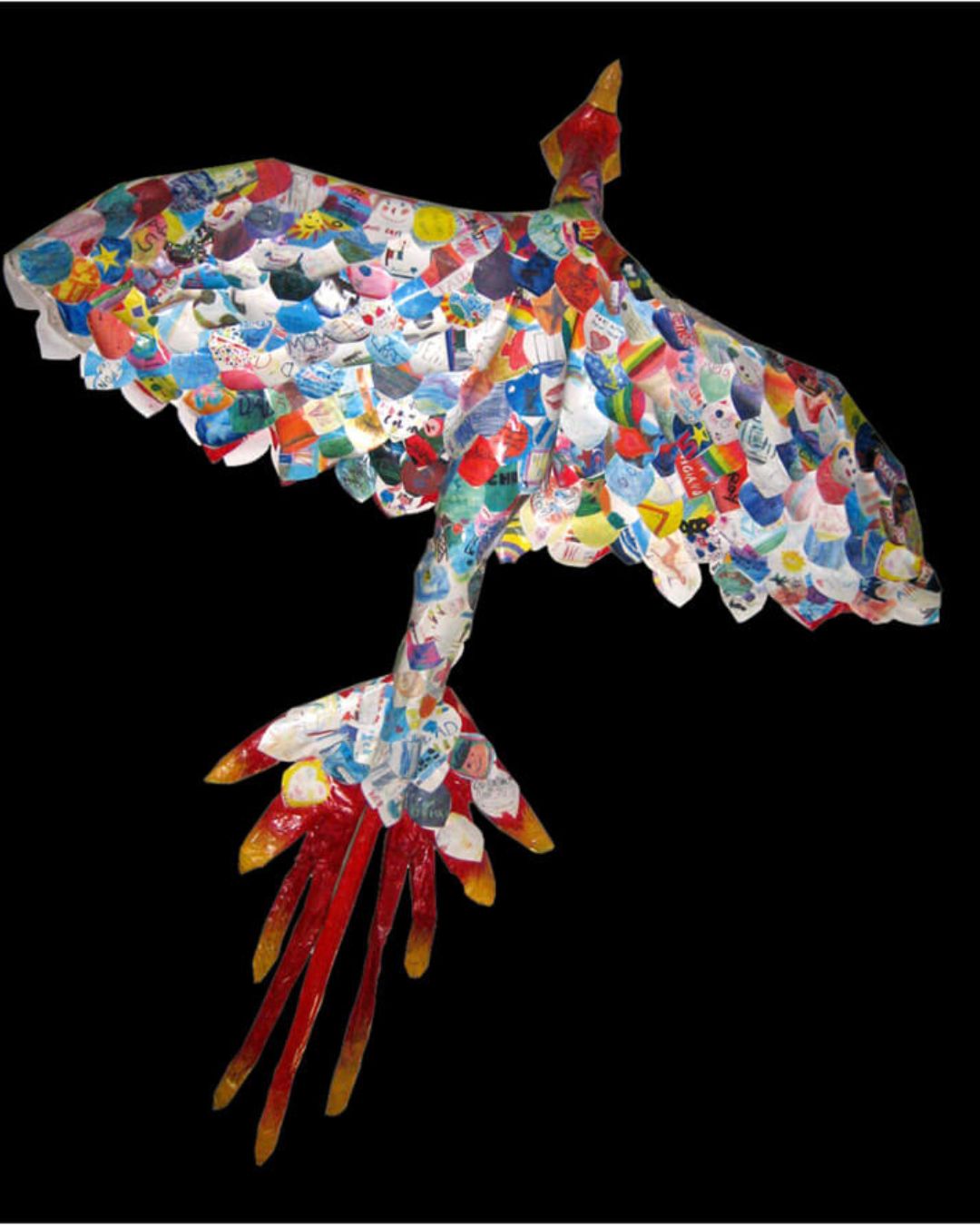
America’s Camp was a nonprofit organization that ran a summer camp for children who lost parents or loved ones in the 9/11 attacks. At the camp, children spent time together in a safe and caring environment, where they could play, make art, and share their feelings with others who had similar experiences. In the summer of 2006, artist Traci Molloy worked with campers at America’s Camp to create a papier mâché sculpture called The Feathers of a Phoenix.
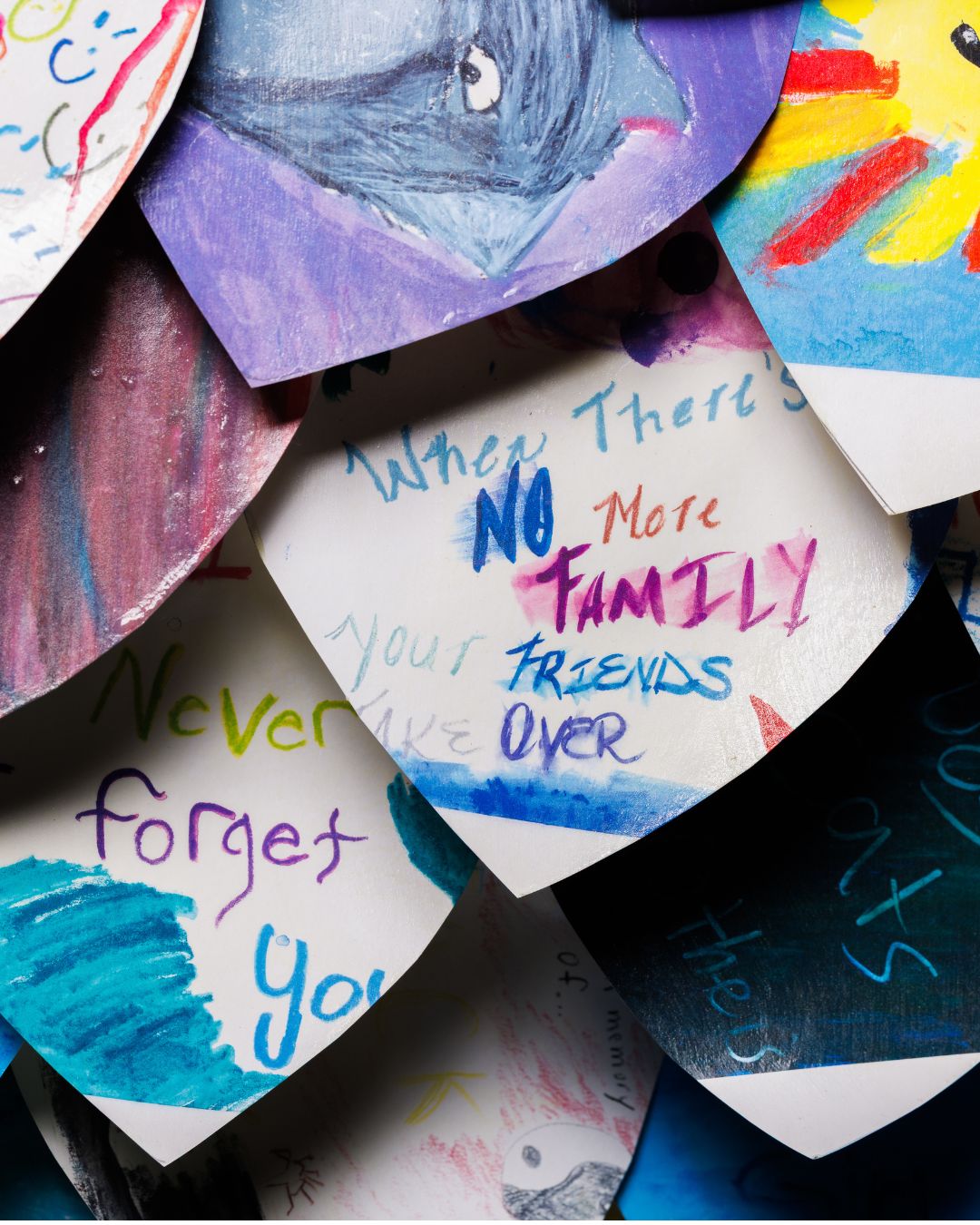
In Greek mythology, the phoenix is a creature that lives forever by being reborn from its ashes, making it a symbol of hope and new beginnings. Each camper created a feather on the phoenix to express how they were feeling or to honor someone important to them – often a parent or loved one who had died. When all the feathers were put together, they formed one large artwork that represented healing, memory, and strength.
-
Project, or hand out images of the Phoenix. Encourage students to look closely at the zoomed-out image of the entire artwork as well as the close image showing some of the details on the feathers.
-
Ask students the following observation questions:
- What stands out or catches your eye as you look at the artwork?
- What do you think the artist wanted the children to feel as they created the phoenix together?
- How do you feel when you see all the feathers together?
- How can making art help people when something difficult happens?
- Hold a class discussion based on student responses. This can also be done as a journaling activity.
- Tell students you will all now work together to make your own phoenix. Together, brainstorm experiences you have all shared – it could be something happy or something challenging. Once you’ve decided what to focus on, each student will make one feather to show their thoughts or feelings about that shared experience. When all the feathers are put together, they will form one phoenix that tells your class's story.
-
Distribute a feather outline to each student.
-
Instruct students to draw a picture or write words about the shared experience they want to honor. Encourage them to use any of the arts supplies available in the classroom when designing their feathers.
-
When students have finished, ask them to cut out their feather and help them attach it to the Phoenix outline so that the feathers overlap but don’t completely block each other.
-
Close the activity by asking students the following questions to help them connect the activity back to their communities and themselves:
- Why do you think remembering together can help people heal?
- How does your family remember people or events that are important to you?